Adopting AI Agents in 2027: A Guide for Fitness Operators

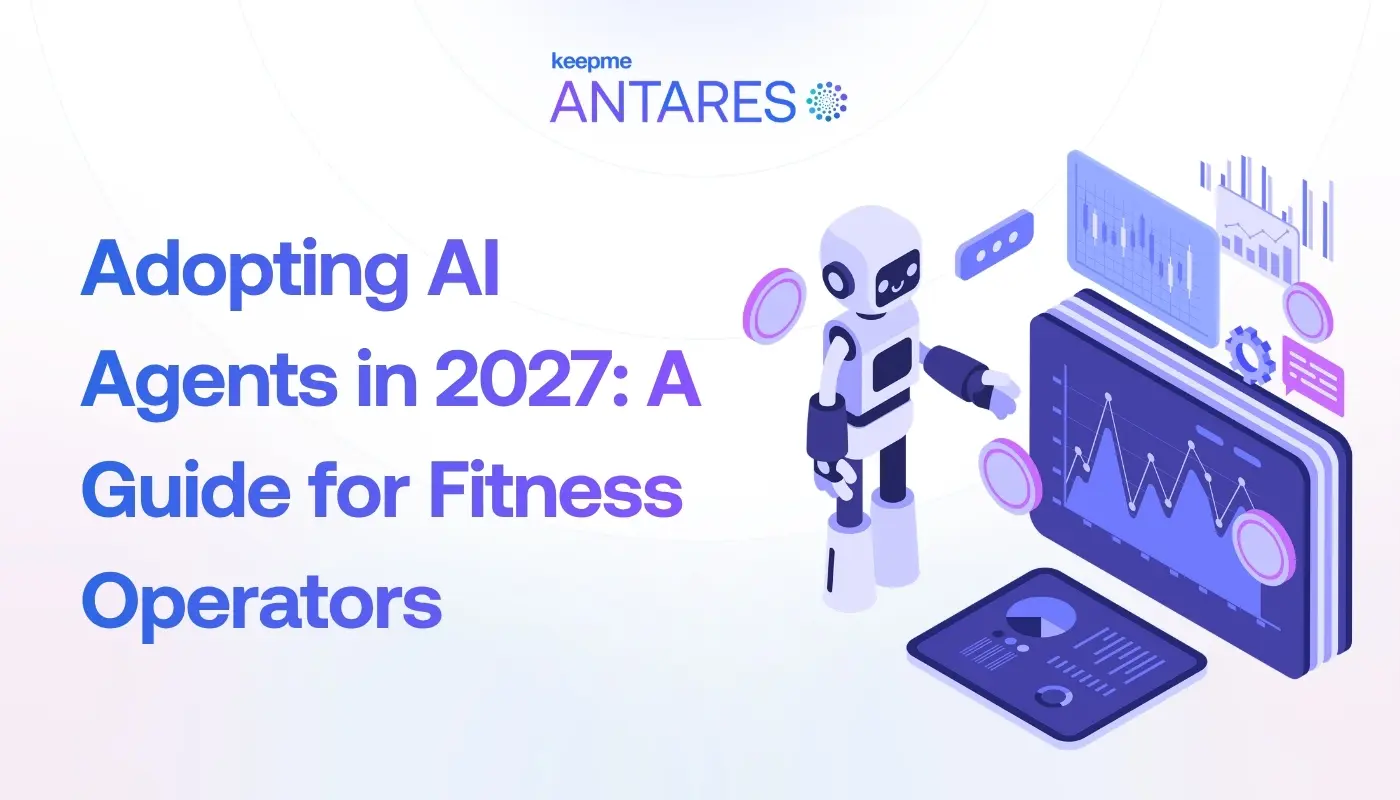
In 2026, AI agents stopped being a novelty for fitness operators. They answered enquiries at midnight, booked tours on Sunday mornings and handled member questions while front desk teams focused on the people in front of them.
The conversation has moved on. The question for 2027 is no longer whether to adopt AI agents. It's how to adopt them well: safely, across every site and with your teams on board.
Working with operators through this shift, a few patterns stand out. Here are the five that matter most as you plan for next year.
1. From a single tool to a team of specialists
The first wave of AI in fitness was a chatbot on the website. Useful, but limited. What's emerging now is a team of specialised agents, each built for one job. One responds to new enquiries and books tours. Another answers calls. Another supports existing members, and another spots members who are starting to drift.
Specialists are more accurate than a generalist bot because each one is trained and measured on a narrow task. The operators getting the most from AI in 2027 will think less about "an AI tool" and more about which jobs they want covered, and in what order.
2. Control, visibility and reversibility come first
Results matter, but they aren't what gets an AI project approved by a leadership team or an IT lead. Confidence is. Before going live, the strongest rollouts answer three questions clearly:
Who decides what the agent can and can't say? Can we see every conversation it has? Can we pause or roll it back, at one site or all of them, at any time?
When those answers are in place, adoption speeds up, because the risk is understood and managed rather than guessed at. We set out our own answers in Why Antares Is A Safe Decision.
3. Adoption is measured in weeks, not quarters
Long implementation projects are where AI initiatives lose momentum. The rollouts that stick follow a short, structured plan: agree the strategy, connect to the systems you already use, train the agents on your brand and policies, test every response, then launch in stages.
Done well, this takes weeks and only a few hours of your team's time. Speed here is about getting to real conversations and real data quickly, so you can learn from them and improve.
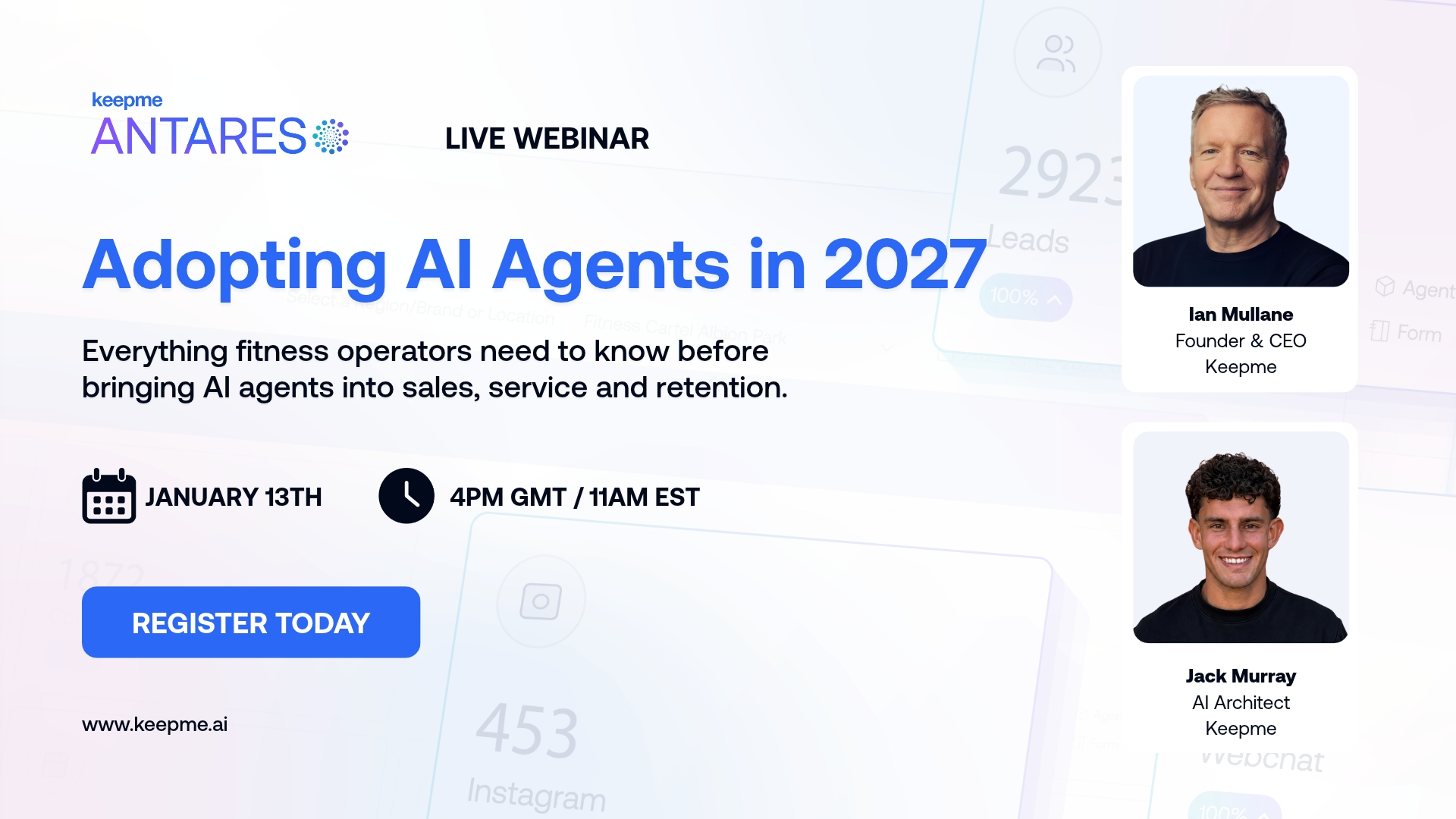
Want to go deeper? Join Keepme CEO and Founder Ian Mullane and AI Architect Jack Murray for Adopting AI Agents in 2027 on Wednesday 13 January, 4pm GMT / 11am EST. 45 minutes, including a short live demo and Q&A. Save your spot
 4. Your teams are part of the plan
When an AI rollout stalls, the cause is rarely the technology. More often, the people who work alongside it weren't brought along. Front desk and sales teams want to know what changes for them.
The answer that works: agents take on the repetitive, out-of-hours and high-volume work, and hand over to a person when a human touch matters. Share early wins with your teams, show them the tours booked overnight, and make it clear the goal is more time for the conversations only they can have.
5. AI search becomes a new front door
People are starting to ask AI assistants which gym to join, which class to try and which club nearby has the best facilities. If those answers describe your clubs inaccurately, or leave them out, you miss a growing share of discovery.
In 2027, making sure AI search finds and describes your clubs correctly will sit alongside your website and social channels as a core part of how new members find you.
Where to start
If you're planning your first agent, start where the volume and value are clearest: new enquiries. Responding instantly and booking tours around the clock delivers measurable results quickly, and builds the confidence to expand into calls, member services and retention.
If you already have an agent live, 2027 is the year to connect the pieces, so every agent learns from what the others see.
How Antares fits in
This is the thinking behind Antares. One platform with every agent included: the sales agent, Nova; the voice agent, Clarion; the member services agent, Atlas; the retention agent, Ember; and the AI search agent, Beacon. All five share one intelligence layer, Pulse, so they get better together.
Antares' AI agents connect to your existing CRM and booking system with no rip-and-replace, go live in 20 days, and can be paused, switched off or rolled back at any time. More than 40 operators across 10 countries already use them. At Fitness First Singapore, the sales agent, Nova, delivered a 185% lift in lead-to-tour bookings and a 49% increase in tour-to-sale conversion.
See it live on 13 January. Ian and Jack will share what they've learned rolling out AI agents with operators worldwide, then show a 20-day adoption plan in practice. Bring your questions. Can't make the live session? Register anyway and we'll send you the replay.